
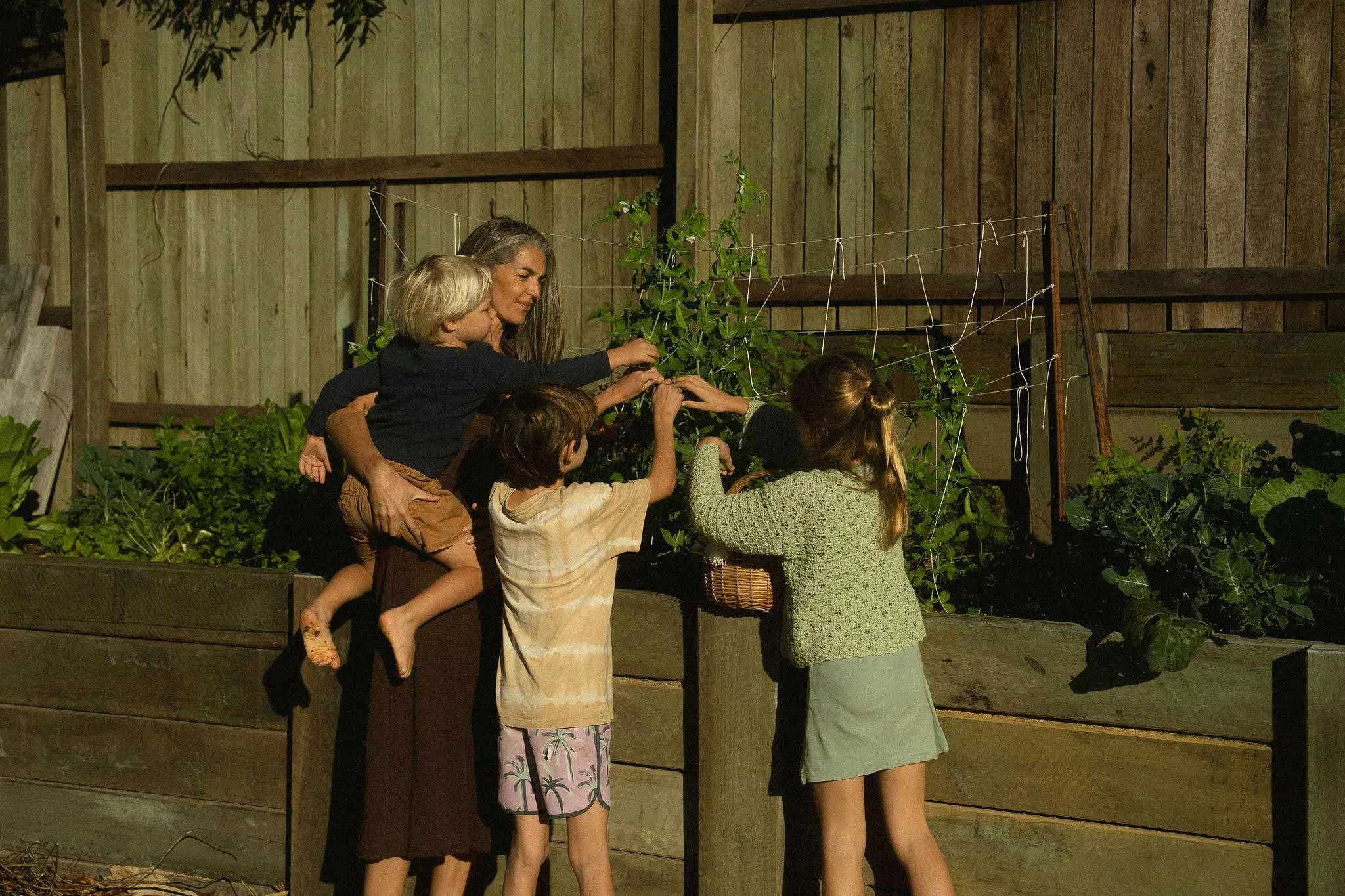
I am a mother, a doula, and a carrier of sacred women's work.
Hi, I’m Kim
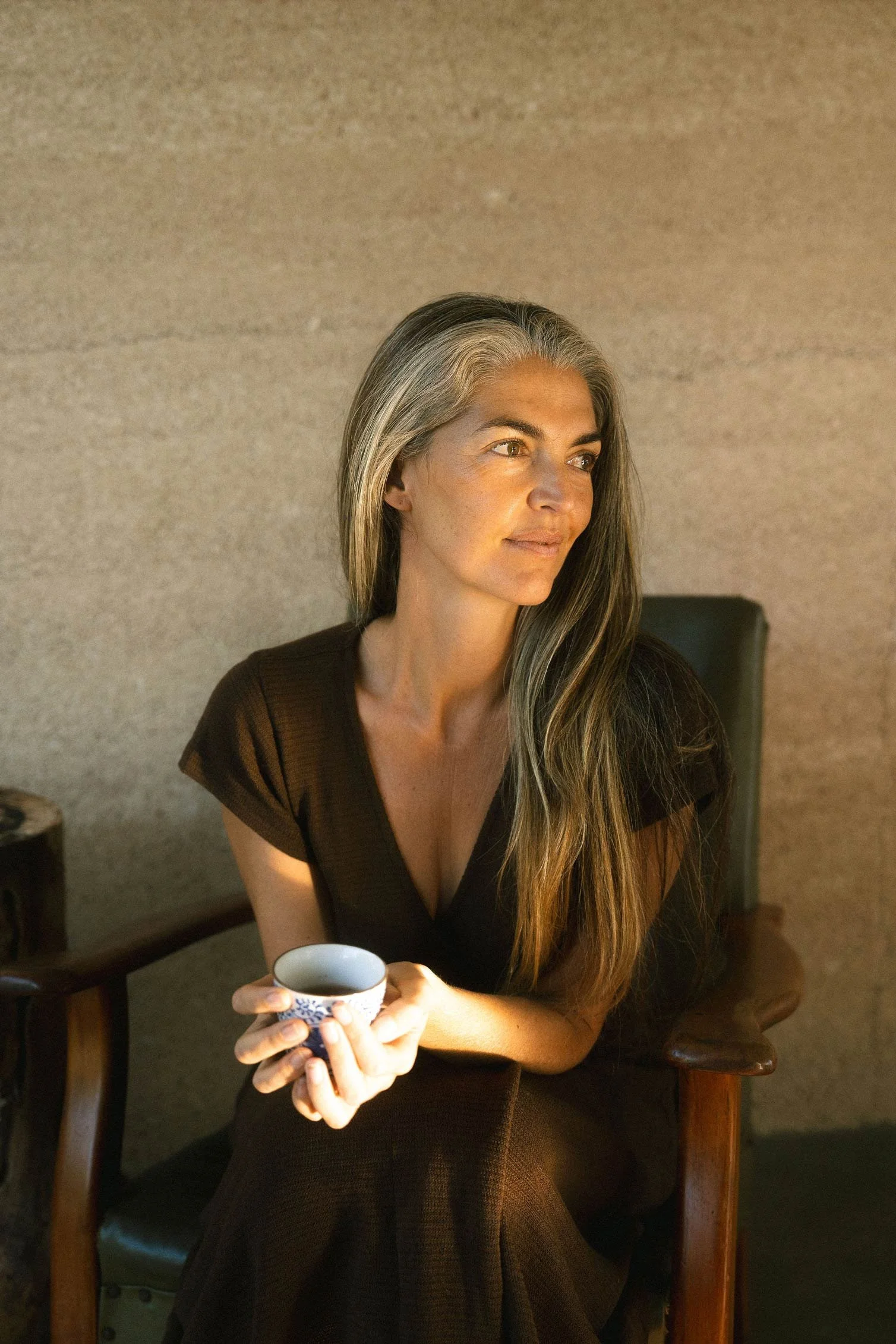
I think for you to really know who I am as a woman, as a mother, I first need to share with you my 4 matrescence journeys that have all lit a fire within me to prioritise serving mothers and changing the way in which we mother the new mother.

My First Matrescence Journey.
My Journey

At 27, I found myself pregnant to a guy I'd just started dating. Though I knew he was my forever person, I was still a nervous, scared young maiden, feeling completely alone. And he was battling his own crisis, leaving me convinced I would be raising this baby on my own.
We were arguing the night I went into labour, and subsequently my body was tense and holding on. Ultimately I was scared, angry, heart broken and feeling completely alone in the long hours of labour.
I begged for an epidural and although I had always hoped to birth naturally, I was grateful for the way it allowed my body to let go and soften.
I thought I had prepared for birth by doing the birth classes. But what I didn’t yet realise was how deeply my ability to soften was connected to feeling safe, supported and held within myself and my relationship.
When my daughter, Taya, was born, I was surrounded by women. Yet, despite their love, I felt unsupported and lost. It wasn’t their fault; they simply didn’t know how to support me. It was a first for all of us. I was the first of my generation in our family to have a baby.
I remember asking my aunt for advice on my unsettled baby, and she asked if I was burping her properly. “I’m supposed to burp my baby? No one told me that!” I was shocked at how much wisdom had been lost between generations.
One morning, my mother came to visit me. I was rattled and exhausted, running on empty with my newborn crying against my chest. I remember snapping at her because she didn’t bring me any food. Not my finest moment, but looking back, I can see that I was asking for more than a meal. I was asking to be cared for and supported while I learned how to be a mother.
I survived on sliced vegetable sticks and tubs of hummus, anything I could quickly grab and eat with one hand. Back then, I didn’t know that my body needed warmth, rest and easy-to-digest meals to help rebuild me from the inside out.
LESSON: This first journey showed me how much energy is focused on birth itself, with little given to what happens after, including the complete metamorphosis that is ‘becoming a mother’.
And when we don’t support a mother during the major rite of passage that is Matrescence, it can leave a mother feeling completely exhausted, alone and overwhelmed.


My Second Matrescence Journey.

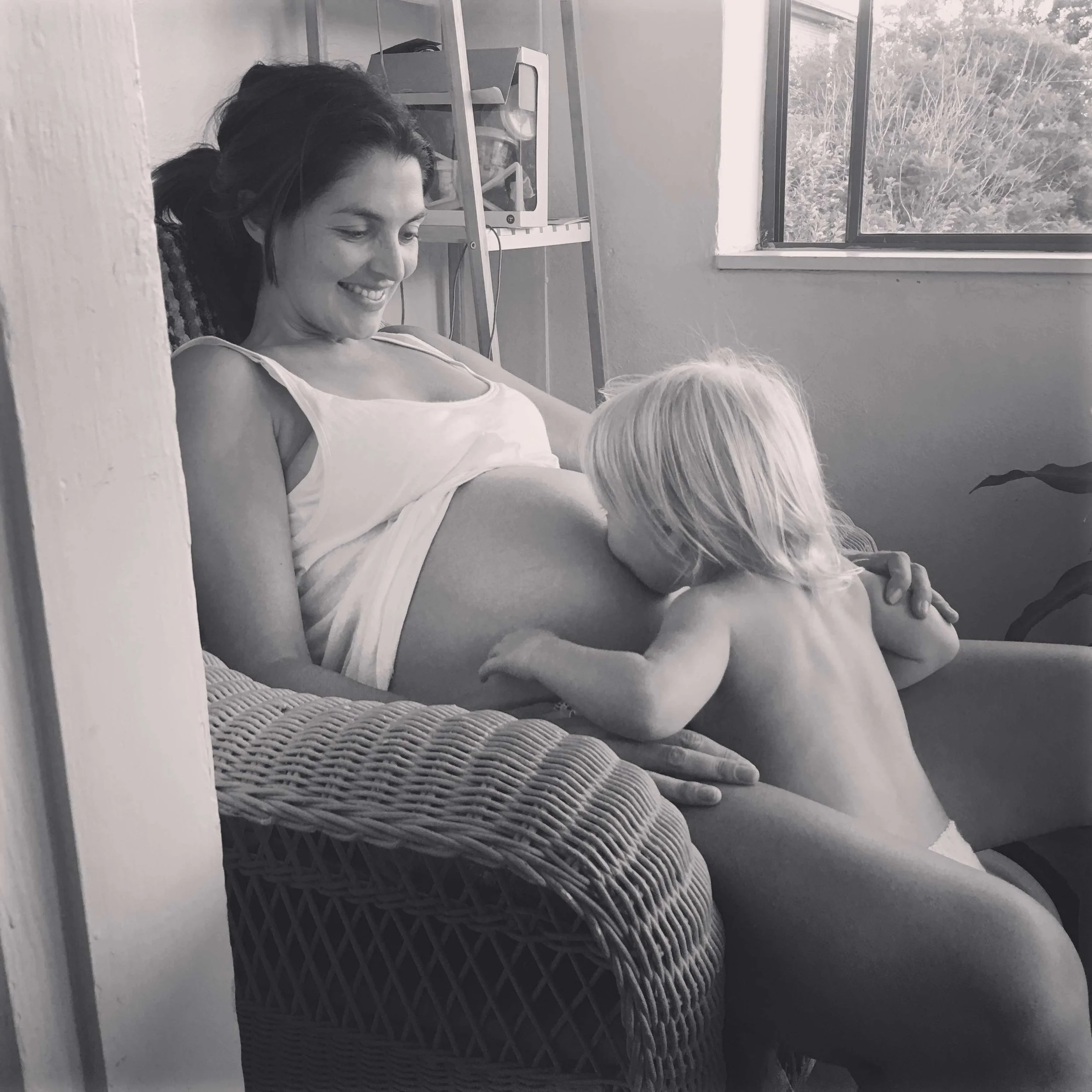
My daughter was 2 when I was about to give birth to my second child. I had learned the lessons from my previous matrescence experience and thought that I had set myself up with better support.
But even with better support systems in place, I experienced really bad post natal depression anxiety. My son had silent reflux and cried relentlessly, his voice often hoarse from crying so much. I reached out for help. First I tried a community nurse, who looked me dead in the eye and said she was worried about me, but offered no solutions. Then I tried a helpline, but instead of sharing support and advice, the woman on the end of the line shamed me for how I was feeling and what I was doing to survive. Then, I went to the doctors for help, who referred me to a therapist who simply thought I needed to breathe through the challenges of new motherhood.
I knew the anxiety and hopelessness I was feeling was not okay. I also knew I was the one able to claw myself out of the dark hole I was in. I tried loads of things to help myself, but one of the biggest helps was hiring a mother’s helper. I paid a woman to come twice a week, cook me lunch, do my laundry, hold my baby so I could shower. Simple things really, yet they transformed my days, weeks and ultimately my mood and how I showed up for my two babies.
And while that time was extremely tough, it revealed to me how many mothers are simply told to breathe through the challenges of new motherhood and how we as a society normalise mothers feeling like shit, when really it doesn’t have to be this way. And that if we simply take care of a new mum, support her to support her children, we could in fact have a community of thriving mothers, whose children are also thriving, and ultimately create a thriving community as a whole.
Lessons from this journey: Postnatal depression and anxiety aren’t just due to hormonal shifts or personal shortcomings; they are the cracks formed when a mother is left unseen, unheard, and utterly depleted. The weight she carries isn’t hers alone, it’s the burden of a culture that has forgotten how to hold her.
My Third Matrescence Journey.

I think it’s worth mentioning that none of my babies were planned. Both were beautiful surprises. My husband and I always tossed up whether we wanted a third. Intuitively I always felt I would have another one once Taya was in Kindy, and I had more time and space. My husband always felt we would have another one when we moved out of Bondi and into a more spacious, slower way of life in Byron.
Two weeks into Taya starting Kindy at her new school in Mullumbimby, I found out I was pregnant. I was stoked at the organic way our life was flowing and coming together just as we had imagined. But at 8 weeks I lost my baby girl. I say girl because I knew who she was, I’d been feeling her soul for years, hovering around me waiting for the stars to align. She already had a name. She still does.
I was a mother, yet so much of me felt like a maiden traversing this new passage of loss. I was in freeze mode, coupled with ‘keep going’ mode. I continued on, dropping my daughter to Kindy, taking my son to playgroup, all the while still bleeding. Still losing my baby girl. I cried a few times. As much as a mother of young kids, whose husband worked 50hours a week would allow. But really there was no reverence and acknowledgement for what I had just been through. There was no ceremony or ritual at all.
Lessons from this journey: This loss taught me how deeply a woman’s confidence, spirit and heart can be wounded when she crosses a profound threshold without witness or reverence.Ceremony would not have taken away my grief, but it could have given it a place to be felt, expressed and held. I came to understand ceremony as a way of consciously marking our rites of passage… honouring what we have crossed, what has changed, recognising what lies before us, and gathering all parts of ourselves as we step into the woman we are becoming.
My Fourth Matrescence Journey.

Immediately after losing my third baby, I became pregnant again. I hadn’t even had a period in between. And this is pretty much my sons energy, he’s all fire and earth, and charges his way through life.
I knew this was my last baby, and I knew this was my chance to rewrite my story around matrescence and thriving as a mother. But I had just moved to the area, and didn’t really have a community. So I decided I was going to create one for myself. I reached out to women I felt connected to but hadn’t yet deepened friendships with. I threw my own blessingway. I invited women I barely knew and asked one of them to set up a meal train for me. It was vulnerable, but I knew the woman I needed to be for this baby. The soul inside me was calling me to be bold and strong and open.
And in that empowered state, I also made the decision to freebirth. I had been assigned a home birth midwife, but I didn’t like her energy. I felt belittled, as if she saw me as someone to manage rather than a sovereign, capable mother. I refused to let anyone diminish my power. So I chose to birth on my own terms, at home, alone, with my husband, to solidify our healing journey as a couple. I needed to feel held by him, fully, in deep trust. And I needed to prove to myself that I could hold myself, that I could heal the little girl within me who had spent a lifetime pleasing others and placing authority figures on pedestals.
And I did. When the kids were in bed, I birthed my son in my rainforest home, to the sound of shamanic drums and my husband’s steady, encouraging words. My daughter walked in moments later, wide-eyed and full of wonder. My son followed minutes after, climbing into bed with us. We all held each other, cocooned in love, in our family bed, soaking in the magic of those first sacred moments together.
In the weeks that followed, the support flooded in. Women brought warm nourishing meals, and there was no raw, cold, one handed snacks in sight. And yet, something was still missing. I had never felt more held by my community, and still, the deep ceremonial honouring of my transformation was missing.
Lessons from this journey: Support and reverence are not the same. Meals can nourish a mother and helping hands can lighten her load, but the woman who has crossed the threshold must also be witnessed in the entirety of what she has been through. I felt the absence of the red tent: the sacred place where women come not only to help, but to listen, tend, reflect a mother’s transformation back to her and honour all she has crossed.That absence became a calling. I knew I wanted to help restore what our culture has forgotten - to ensure mothers are not only cared for after birth, but deeply seen, honoured and welcomed into who they have become.Loving words